How AI Can Support Everyday Business Operations
A grounded look at how AI tools are being used across typical business functions — and what's realistic to expect in your first year of adoption.
Read ArticleWe work with operations teams, founders, and business owners to identify where AI tools and automation can genuinely improve day-to-day work — without the hype, and without overpromising outcomes.
We don't apply AI for its own sake. Every service we offer starts with understanding how your business currently operates — and where automation or AI tools can make a genuine difference.
We assess your workflows, identify suitable AI tools, and create a structured plan for responsible implementation — including what not to automate.
Learn MoreReducing repetitive manual work by connecting your existing tools and building automated workflows that run reliably in the background.
Learn MoreBuilding and configuring AI assistants that handle common enquiries, freeing your team to focus on higher-value interactions with customers.
Learn MoreReviewing internal operations to find inefficiencies, then recommending and implementing targeted improvements — often with straightforward automation tools.
Learn MoreStructuring your organisation's knowledge and data so it can actually be used — by your team, and by AI tools when appropriate.
Learn MoreSelect the area of your business you're most interested in improving, and we'll outline the types of AI tools that are typically most relevant. This is a starting point — not a prescription.
Choose the area you're most interested in exploring.
These are commonly used tools in this area. Suitability depends on your specific setup and volume.
These suggestions are illustrative. A proper consultation would assess what's right for your specific context.

Most businesses don't need AI to transform everything overnight. They need specific, well-implemented tools that solve real problems — without disrupting what's already working.
This short assessment helps you think through your current operational readiness for AI tools. It takes about 2 minutes and gives you a practical score with guidance.
How well-documented are your core business processes?
Think about things like onboarding, customer handling, or order processing.
How organised is your business data?
Consider customer data, sales records, and operational information.
How does your team typically respond to new tools and changes?
This is often one of the biggest factors in whether AI tools succeed or not.
Are there clear, repetitive tasks that take significant time each week?
Automation works best when there are predictable, high-volume tasks.
What is your current appetite for AI investment?
This helps us understand what kind of engagement would be most realistic.
Browse examples of how different business types have used AI tools in day-to-day operations.
Small businesses often benefit most from targeted automation that handles admin work, allowing founders and small teams to focus on growth and client relationships.

Ops teams typically deal with high-volume, repeatable work — which is exactly where automation delivers the most consistent value.

Online retail involves many repetitive interactions — enquiries, returns, order updates — that are well-suited to intelligent automation.

Consultancies, law firms, accountants, and agencies often face significant document and knowledge management challenges that AI tools can help address.

Our team brings practical experience across a range of AI and automation technologies, applied in real business contexts — not just theoretical settings.

Answer a few questions about your day-to-day work and we'll suggest where AI tools are most likely to add value.
How much time does your team spend on written communication each day?
Emails, reports, meeting notes, proposals, and similar documents.
Does your team process a lot of documents or structured data?
For example: invoices, contracts, applications, spreadsheets, or forms.
Where do most of your bottlenecks occur?
Think about what causes delays or overwork most frequently.
How many customer interactions does your team handle each week?
Every engagement follows the same structured approach — starting with understanding, not with solutions.
We begin with a detailed review of your current workflows, tools, and team structure to understand where friction exists.
We map your processes and identify specific areas where automation or AI tools are genuinely appropriate — and where they're not.
We produce a clear implementation plan with defined scope, realistic timelines, and transparent cost estimates.
We build, configure, and test solutions in a structured way — ensuring your team understands what's being put in place and why.
We provide full documentation and training so your team can manage and adapt the systems independently going forward.
Straightforward feedback from businesses we've worked with.
"We were spending hours each week on manual data entry and report generation. Mye Tech helped us automate most of it. It wasn't instant — there was setup time — but it's now working reliably and the team are genuinely happier."
"Honestly, I came in expecting a lot of AI hype. Instead they were quite measured — told us what was realistic and what wasn't. We implemented two workflows and both are working well. No drama."
"The AI assistant they set up for our customer support inbox has reduced the number of tickets our team handles by a meaningful amount. It handles the straightforward queries consistently, and escalates when needed. Works as described."
A quick diagnostic to estimate how much of your current workload could potentially be automated, and what type of automation would suit you best.
What proportion of your team's tasks are truly repetitive?
Repetitive means similar inputs and similar outputs each time.
How much human review is currently required before things leave your business?
Does your business already use software tools with APIs or integration capabilities?
For example: CRM, helpdesk, accounting software, email platforms.
Are there measurable negative consequences when tasks are missed or delayed?
0%
Note: This estimate is indicative only. Actual automation potential depends on a detailed review of your specific workflows and systems.
Talk to Us About ThisA small, experienced team — everyone you meet during a project is actively involved in the work.

10+ years in technology consulting. Has worked with businesses across logistics, retail, and professional services on digital transformation and automation projects.

Background in data engineering and LLM integration. Leads technical implementation across most client projects, with a focus on reliability and maintainability.

Former operations manager who transitioned into automation consultancy. Brings a practical, ground-level perspective to identifying where automation actually helps.
Leads onboarding, documentation, and team training. Ensures the people who have to use the tools we build are confident and prepared before handover.
We believe AI tools should be implemented in ways that genuinely benefit the businesses and people using them — not deployed carelessly in pursuit of novelty or cost reduction at the expense of quality.
We're direct about what AI tools can and can't do. We won't recommend a tool if we don't think it's appropriate for your context.
Every automated system we build includes clear escalation paths and human checkpoints. We don't remove people from important decisions.
We follow GDPR principles throughout our work. Before any data flows through a system, we assess and document what's being used and why.
You'll always understand how the systems we build work. We document everything and train your team to manage it independently.
Long-form articles written for business owners and managers — not engineers.
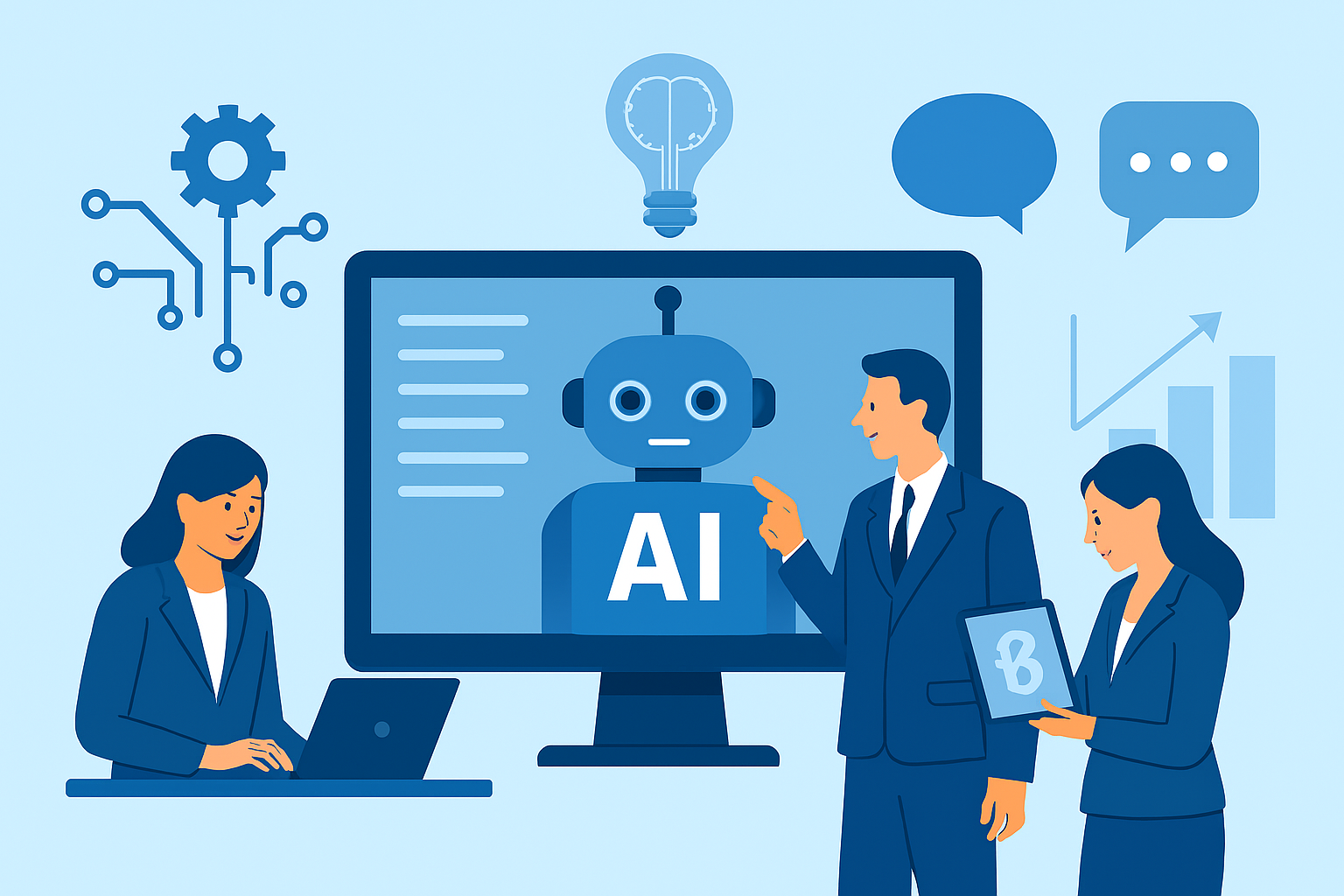
A grounded look at how AI tools are being used across typical business functions — and what's realistic to expect in your first year of adoption.
Read Article
Automation isn't new — but AI has changed what's possible. This article explains the different types of automation and how to think about where it fits in your business.
Read Article
What AI assistants are genuinely good at, where they still fall short, and how to decide whether one makes sense for your customer-facing or internal operations.
Read ArticleBook a free 30-minute consultation. No commitment, no sales pressure — just a structured conversation about where AI tools might genuinely help your business.
Book a Free Consultation